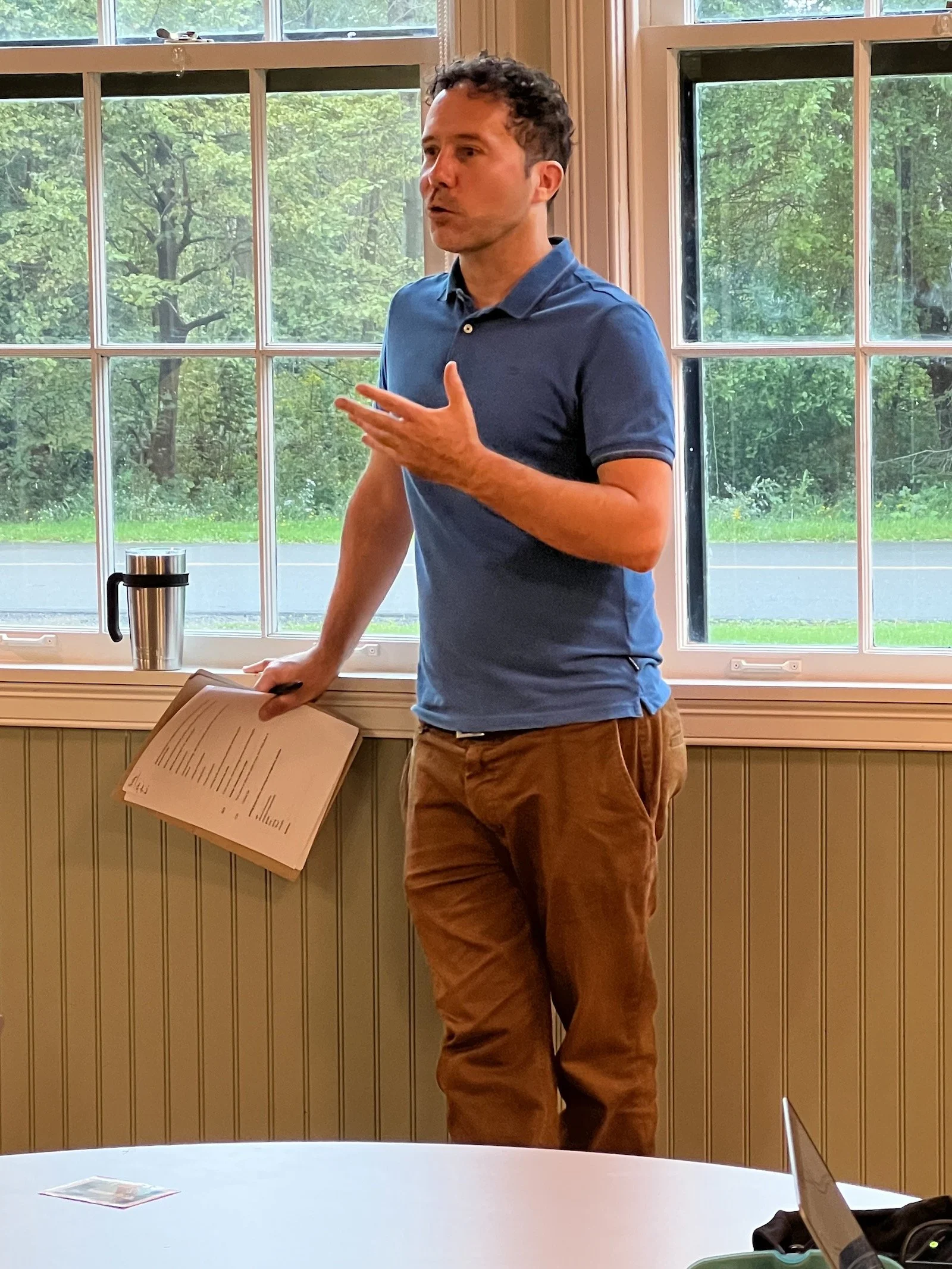
Earlier this spring, I was invited to be part of a keynote panel at the Atlantic Universities Undergraduate English Conference. The panel was directed at a gathering of undergraduate students active in creative writing. We were there to talk about writing in a fractured world. As writers, what gives us hope when so many things seem to be coming apart at the seams? The conversation was lively, full of humour and great stories.
When it came time for the Q & A segment, I was inspired by the the questions from the audience. Some wanted to know how to get published or where to send their manuscripts. Many asked questions about what I’ve learned from a few decades of experience in the writing, publishing, and journalism worlds.
The most impactful part of the conversation for me centred around trust. These writers were grappling with whom to trust with their stories and poems, memoirs and essays. Many have taken creative writing courses and have received feedback from their classmates and professors. Some were having trouble wading through notes that felt off or incomplete. One younger writer asked me how we learn to separate critical feedback about their writing from their sense of who they are as a person.
Sometimes getting feedback feels like someone is criticizing the deepest parts of who I am. It makes me want to run away and not share my writing with anyone.
I felt privileged to witness this honesty in so public a forum. The truth is it can be hard to have another set of eyes on a story that feels like an extension of our deepest selves. I shared what I have learned, how there’s a balance between trusting our instincts and learning to receive feedback. In part this depends on the project or the person giving the feedback. In my coaching practise, I often speak about how each of us has an ideal reader—the person for whom our stories and style are second nature, who understand the heart of what we are trying to say. That’s a rare gift. The ideal reader will be different for each of us. The ideal reader might vary by project. My fiction and magazine editors each bring very different points of view and life experiences to work that is intended for very different audiences.
What I’ve learned over the years is to sit with feedback and listen deeply to myself to learn why I feel the way I do. Sometimes the writing is so emotionally raw that it might not be ready for feedback. Sometimes we need a reader to simply hold the writing and bear witness to the process of creation and what it stirs in us. To sit with us in the messiness confusion without judgement. And sometimes we need someone to push us gently into places in our writing that scare us but are necessary for the writing to grow.
We all deserve a place to feel like what we write matters. It matters to who we are, it matters to how we grow and evolve. In a frenetic world where capitalism and the attention economy continue to shrink the space available for reflection and deep engagement, it’s a privilege to be in rich, sustained conversation with other writers.
In my coaching practice, I aim to create space for writers to feel safe to explore, to feel seen without judgement as a fundamental prerequisite to the act of creation. I hold space for what we imagine and dream even as it struggles to finds its way into words. It’s one of the gifts of being a writing coach. Every client relationship is different because the goals and experiences of every client are unique.
If you’re curious about what coaching might look like for you, drop me a line and we can find a time to connect for a free consultation. My coaching and Manuscript Tune-Up cohorts are full through the end of summer but my doors are currently open for inquiries for fall and beyond.
Yours in writing,
Trevor